Buying land in Waverly can feel exciting right up until you realize how many details sit below the surface. A parcel might look perfect online, but zoning, flood maps, access, septic rules, and county permits can change what you can actually do with it. If you want to avoid expensive surprises, a little upfront due diligence goes a long way. Let’s dive in.
Start With Camden County Rules
Waverly is an unincorporated community, which means land-use questions usually run through Camden County rather than a city government. That makes the county’s planning, zoning, permitting, GIS, and property-record offices key stops before you move forward on a purchase.
That local context matters because Camden County is a large coastal county with 613 square miles of land and 720 miles of public roads. In practical terms, one parcel may have very different access, drainage, and flood conditions from another, even if the listings look similar at first glance.
Check Flood Risk Early
In Waverly, flood risk is not a minor detail. Camden County says about 35% of residents live within the 100-year floodplain, and about 50% of the land is wetlands. That means map review should be one of your first steps, not something you save for later.
Camden County publishes printable zoning, future land use, flood, and storm-surge maps. Reviewing those maps can help you understand whether the lot may need added planning for site design, elevation, drainage, insurance, or buildable area.
If the parcel is in unincorporated Camden County, there may also be a flood-insurance cost advantage to know about. The county participates in FEMA’s Community Rating System with a Class 6 rating, which the county says provides a 20% flood-insurance discount for unincorporated residents.
Confirm Zoning Before You Assume Anything
A land listing is not the same thing as a build-ready homesite. Camden County’s Unified Development Code includes agricultural, residential, manufactured-home, commercial, industrial, conservation, and overlay districts, and uses that are not listed as allowed in a district are prohibited.
That means you should confirm whether the parcel is zoned for your intended use before you buy. If you plan to build a house, place a manufactured home, add a workshop, or split the land later, those plans should be checked against the current zoning and any approval requirements.
If changes are needed, Camden County’s Planning Commission reviews rezoning, variance, and land-use requests before final county action. That does not mean a parcel cannot work for your goals, but it does mean you should verify the path before closing.
Review Frontage, Width, and Usable Area
Some of the biggest land-buying mistakes happen when buyers focus on total acreage and ignore buildability details. In Camden County, no building or structure may be erected on a lot without at least 25 feet of frontage.
Lot width matters too. For septic-served lots, the county says lots generally need 100 feet of width with public water or 150 feet with a private well in the septic area. The Health Department may also require larger lot sizes depending on the property.
Usable land can be very different from total land. The county says land within 50 feet of lakes, rivers, streams, wetlands, or similar bodies of water does not count toward minimum lot size, which can be a major issue on coastal or marsh-adjacent property.
Verify Records, Plats, and Surveys
Before buying land, it helps to compare the listing against the official paper trail. Camden County says real property records are kept by the Clerk of Superior Court, and recorded plats and surveys must meet Georgia technical standards.
You can also cross-check tax maps and GIS maps through county resources. If there is any confusion about boundaries, frontage, easements, or past recording, those questions are worth clearing up before you commit.
A zoning verification form is also available through the county’s forms portal. For many buyers, this is a smart way to confirm the basics instead of relying only on listing remarks or verbal information.
Understand Sewer, Septic, and Well Needs
Utilities often shape the real cost of a land purchase. If public sewer is available, Camden County code requires connection when the sewer is within 100 feet of the property line after notice.
If sewer is not available, the property must use a private wastewater disposal system that meets county and state requirements. The county also says a private wastewater disposal permit is not effective until Environmental Health approves the installation, so septic feasibility should be checked early.
If the lot will need a private well, placement rules matter. Georgia DPH says wells should be located away from pollution sources and should not be in flood-prone areas unless the casing extends at least two feet above the highest known flood of record.
Georgia DPH also lists minimum separation distances for private wells, including 10 feet from a sewer line, 50 feet from a septic tank, and 100 feet from a septic absorption field. Wells must be installed by a licensed water-well contractor, and DPH recommends annual bacterial testing and chemical screening every three years.
Don’t Overlook Driveway Access
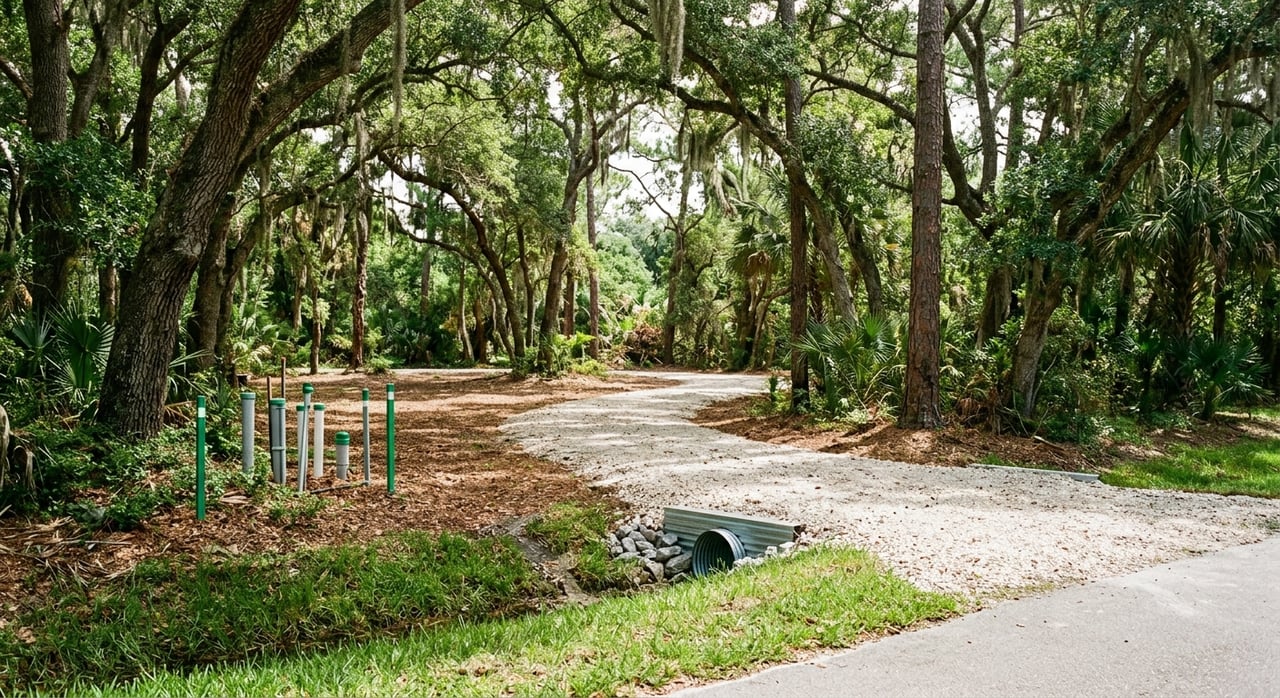
You can own a parcel and still face extra work before you can reach it properly. Camden County Public Works requires a driveway permit before installing a driveway or any means of ingress and egress to property that abuts a county road or county-maintained road.
The county inspects the site to determine culvert size, and the property owner is responsible for the culvert and installation. That can affect both timing and budget, especially on lots with drainage needs.
If your project involves utility work, right-of-way encroachment, pavement cuts, or lane closures tied to county property, those items also need county review and permitting. This is one reason local builder and site-work conversations matter so much on raw land.
Plan for Site Work and Permits
Land does not always stay simple once you start clearing or grading. Camden County provides a Land Disturbance Activity permit, and the application may call for erosion and sediment control plans, wetland attachments when applicable, stormwater plans, utility plans, and other site documents.
That is especially important in a coastal county where drainage and wetlands can affect what happens on the ground. If you are budgeting for a future build, site-prep costs and permit requirements should be part of your early planning.
Before any mechanized digging begins, you should also contact 811 so buried utilities can be located. That step helps reduce risk before excavation starts.
Manufactured Homes Need a Separate Permit Path
If you are buying land for a manufactured home, confirm that process at the beginning. Camden County says all mobile and manufactured homes in the county need a location permit, applied for within 30 days of permanent placement and renewed annually.
The county’s process also says zoning and FEMA approval come first, followed by septic approval, and then the tax-location sticker before final inspection. If you are comparing land for a site-built home versus a manufactured home, this is an important distinction to understand.
Ask Builders the Right Questions
If you plan to build, your builder should understand Camden County’s local process. Planning and Development handles building permits, zoning and land-use applications, GIS, addressing, and contractor registration.
The county’s inspections process says plans are first brought to Planning and Development for review, several departments review them in weekly meetings, pre-construction meetings are recommended, and new construction requires fire and life-safety inspection before occupancy. A builder who already knows that workflow can help you avoid delays.
Good builder questions in Waverly include:
- Will this lot likely need septic, sewer, a well, or some combination of those?
- Where can the house, driveway, well, and septic system realistically fit?
- How will flood-zone conditions affect site design or elevation needs?
- What permitting steps may be needed before clearing or grading begins?
- How do you handle erosion control, driveway permitting, and county reviews?
A Smart Waverly Land Checklist
Before you buy land in Waverly, try to confirm these points:
- Zoning matches your intended use
- Frontage, width, and lot size support your plans
- Wetlands, setbacks, and water features do not shrink the usable area too much
- Flood maps and storm-surge maps have been reviewed
- Sewer availability has been checked
- Septic feasibility has been explored if sewer is unavailable
- Well placement appears workable if public water is not available
- Driveway access and culvert needs are understood
- Recorded plats, surveys, and county records match the listing
- Any special permit path for manufactured homes or land disturbance is clear
Why Local Guidance Helps
Buying land is rarely just about the asking price. In Waverly, the real decision often comes down to what the parcel allows, what it will take to improve it, and how smoothly you can move through Camden County’s process.
That is where local guidance can make a big difference, especially if you are relocating, buying remotely, or comparing several lots at once. A calm, practical review of maps, records, access, and utility questions can help you focus on land that truly fits your goals.
If you are thinking about buying land in Waverly and want help narrowing down the right parcel, reach out to Wendy Vazquez Galan. She can help you think through the practical details so your next step feels clear and low-stress.
FAQs
What should I check first before buying land in Waverly, Georgia?
- Start with zoning, flood maps, frontage, lot width, and utility availability because those items often determine whether the parcel fits your plans.
Does flood risk matter when buying land in Waverly, Georgia?
- Yes. Camden County says a significant share of residents live in the 100-year floodplain and about half of the land is wetlands, so flood and storm-surge map review is an important part of due diligence.
Can I place a manufactured home on any land parcel in Waverly, Georgia?
- No. You should confirm zoning first, then review Camden County’s separate manufactured-home permit path, including location permit requirements and approval steps.
Does a Waverly land parcel need sewer or septic approval?
- It depends on availability. If public sewer is available under county rules, connection may be required, and if not, the property must meet private wastewater disposal requirements with Environmental Health approval.
Do I need a driveway permit for land in Waverly, Georgia?
- If the property abuts a county road or county-maintained road, Camden County Public Works requires a driveway permit before installing a driveway or access point.
Why is a survey important when buying land in Waverly, Georgia?
- A survey and recorded plat can help confirm boundaries, frontage, and other site details so you can compare the listing to the official county record more confidently.